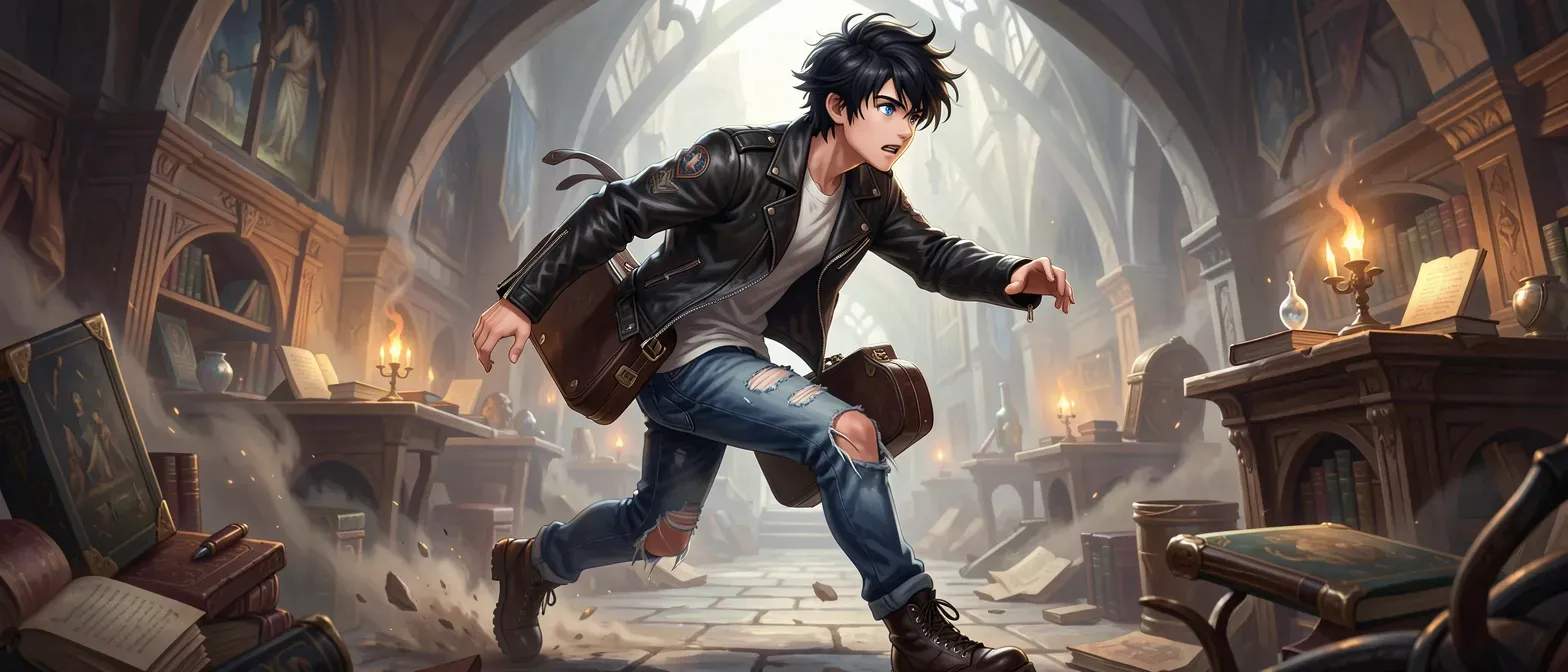
In the rain-slicked streets of a decaying industrial town, seventeen-year-old Duncan Lockwood moved with the coiled menace of a cornered alley cat. Tall and wiry, his frame was draped in a scuffed black leather jacket over a faded band tee, ripped dark jeans, and scuffed combat boots, while a silver chain glinted at his throat. Messy raven hair shadowed eyes the color of storm clouds, and a faint scar traced his left cheek from some forgotten brawl. Yet this bad boy exterior concealed a heart tuned to sorrowful melodies; his late mother’s accordion, tucked away in a battered case, called to him nightly. He craved nothing more than to coax its wheezing notes into life, honoring her ghost with songs she once played by lamplight. Social expectation chained him, however—his gang demanded fists and snarls, sneering at any hint of softness, forcing him to hide his practice in derelict warehouses where the bellows sighed like restless spirits. Conflicts gnawed at his soul: the clash between leather-clad rebellion and the tender pull of music, compounded by whispers of weakness from peers and the ache of maternal loss. Secretly he studied faded sheet music by flashlight, cracking his knuckles in nervous rhythm before each session, a quirk that betrayed his hidden nerves. Through stubborn persistence he wove the two worlds, playing at dawn when the town slept and maintaining his swagger by day. His resolve proved strong enough to bridge the divide, culminating in a clandestine rooftop performance that earned wary respect from unlikely listeners. Though the internal tempest never fully quieted, Duncan found a fragile peace, his accordion now a silent emblem beneath the jacket.