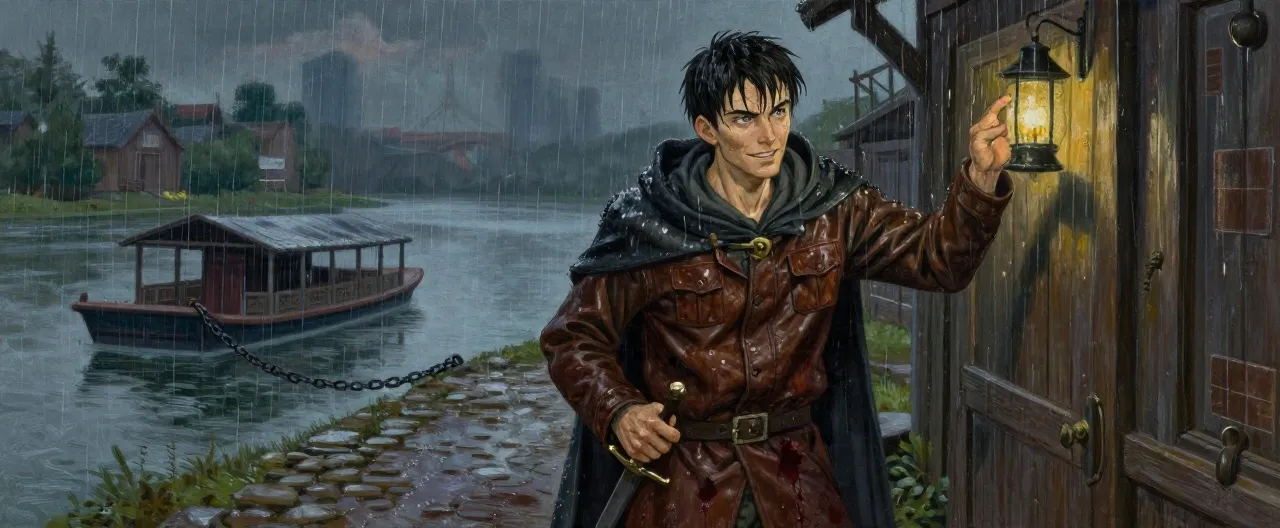
Wyatt Frost was born in Saltpans, the son of a locksmith named Aldous Frost whose shop stood on the lane between the salt-factors' warehouses and the market square. His childhood was spent under a workbench learning tumblers, wards, and the difference between a lock that keeps people out and a lock that keeps people in. His father was honest to a fault, which is why the shop failed — the Ledger-Keeper's people, or whoever came before them, priced Aldous out of the salt-factor contracts, and the family's savings went to the shrine of Waukeen for a loan that never quite covered the winter. Aldous died owing money, and Wyatt inherited a set of picks, a talent, and a grudge.
He turned to night work the way most Saltpans boys of his generation did: small thefts at first, then paid listening. The town's temple of Waukeen keeps the rolls of names and tithes, the Weighing House keeps the debts, and the ferry keeps the tolls — everything in Saltpans is written down somewhere, and there is steady coin for a man who can stand in a stairwell and remember what was said on the other side of a door.
Wyatt learned Thieves' Cant from a river smuggler named Coss who ran tar and tobacco up from the marsh channels, and from him he learned the first rule of the trade: never be the most interesting person in the room.
For years Wyatt worked both sides of the line — sometimes for the watch when the sergeant wanted quiet proof, sometimes for merchants checking their rivals, occasionally for a Harper agent passing through who paid well and asked careful questions about who owned what along the salt road. He never took a side. That was the point. Cleverness over force, always; he despises the enforcers and collectors who solve every problem with a club, and he's spent his whole career making sure he never has to.
Three weeks ago the counting in Saltpans stopped making sense. People vanished and came back quiet, signing papers they didn't remember. The ferry chain was cut and re-forged twice. Wyatt was hired — he won't say by whom, and the name is the only coin he's hoarding harder than the rest — to listen at the doors of the Weighing House and the ferry winch house. What he overheard was worse than smuggling or tax fraud: talk of forged chain links stamped with the shrine's own mark, a ledger with names bound into it like pages, and a Buyer far to the south whose letters arrive sealed in black wax. He pocketed a torn corner of one such letter as proof, and that corner is the reason three hired blades are hunting him tonight.
They caught him once already — the wound at his left side is theirs — but he slipped them at the ferry landing and ran for the market square, betting that strangers in town would be the only people in Saltpans the Ledger-Keeper hasn't counted yet. Now he needs allies with blades and a grudge against bullies, and he's willing to spend every secret he has left to buy them. He jokes because he's terrified, and he's terrified because for the first time in his life, the listening has turned into the story — and in Saltpans, the story gets written down in someone's ledger.