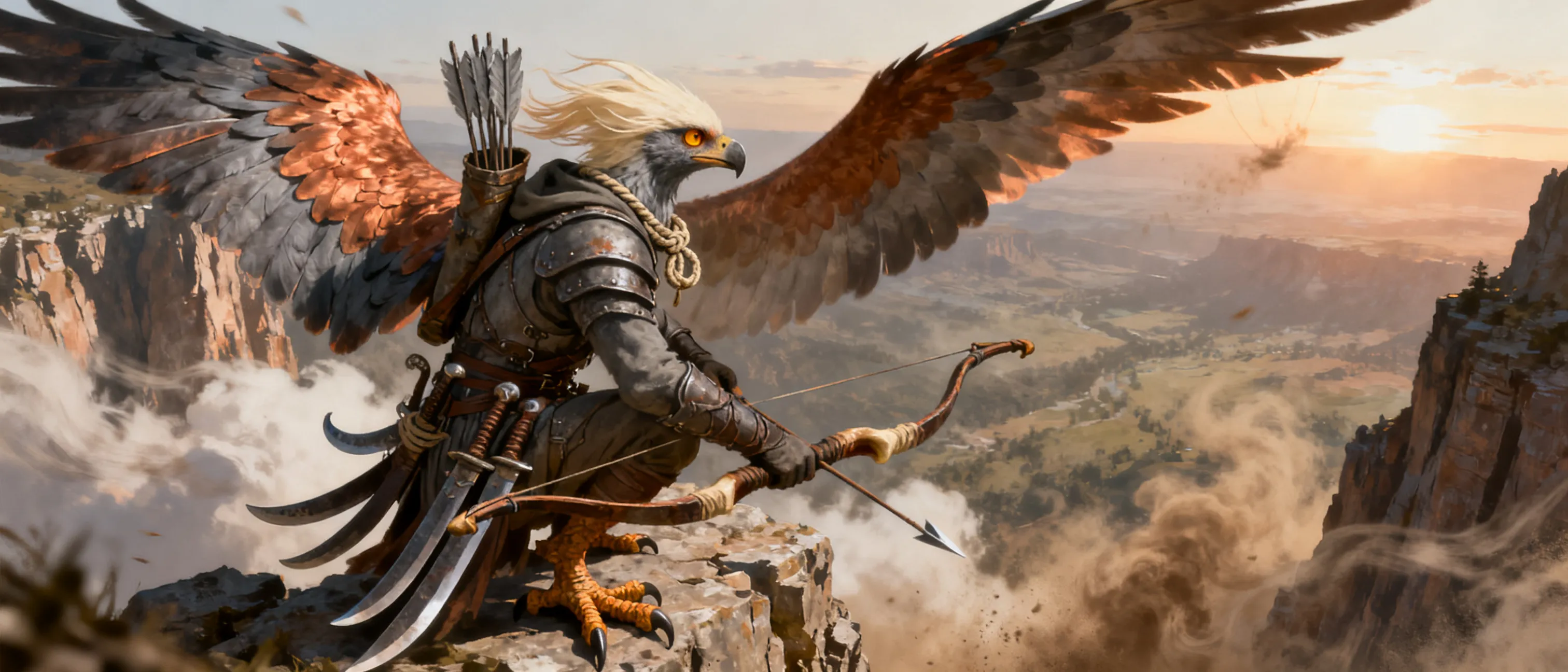
Kriivak hatched in a eyrie-city of aarakocra built into the high peaks — wind-carved spires and rope bridges far above the trade roads of the lowlands. His clutch was small, his kin practical. The Skywardens, as his family line was called, served as lookouts and messengers for the mountain communities, watching the passes for rockslides, storms, and worse. From his earliest memory, Kriivak was taught two things: read the sky, and never come down unless you must.
He came down. He must.
The eyrie traded with the lowland towns through intermediaries — mountain folk who climbed partway, never all the way. One winter, those intermediaries began demanding more: more grain, more medicine, more metal, in exchange for the aarakocra's carved talismans and sky-guided courier work. When the elders pushed back, the shipments stopped entirely. That winter, the eyrie went hungry, and Kriivak's younger clutch-sibling did not survive the cold. The elders chose patience and diplomacy. Kriivak chose to leave.
He descended into the world of roads and rooftops and discovered it was exactly as crooked as he'd suspected — but crooked in ways he could use. His eyes could spot a guard's patrol pattern from three rooftops up. His wings could cross a walled city in minutes. His talons could open a window, a lock, or a throat, in ascending order of reluctance. He fell in with a smuggling crew that moved goods the greedy had taxed into scarcity — grain, medicine, escaped prisoners — out over the checkpoints that ground-bound lawmen thought were airtight. Nobody watches the sky for thieves. That was Kriivak's whole trade, and he was very good at it.
The crew gave him a name, a charm, and something he hadn't felt since leaving home: belonging. For a few years, the work felt clean. Then it wasn't. A job went wrong — a buyer who claimed the cargo was medicine was arming a private war, and Kriivak's wings had carried it to him without question. The crew took the coin. Kriivak took the charm off his neck, then put it back on, because taking it off felt like lying.
He left the crew quietly, the way he does everything, and now works alone — or nearly alone — as a scout, guide, and occasional thief of things that deserve stealing. He has taken up the old family title, Skywarden, though he hasn't earned it yet in his own eyes. He watches the roads and passes for the people who can't watch for themselves, marks the movements of slavers, extortioners, and war-profiteers, and puts an arrow exactly where it needs to go when watching isn't enough.
He is hunting for two things: a way to reopen honest trade for an eyrie that still won't speak to him, and proof that the old crew's last buyer is who he thinks he is. The ranger's craft came back to him like a remembered language — the tracking, the patience, the mark — and the criminal's craft never left. He is, in the end, both: a warden of the sky who learned his trade in the underworld, trying to spend the second half of his life paying for the first.