Disease Sense 60 ft. (Can sense disease within 60 feet of itself.)
passive Perception 11
Characteristics
Damage Vulnerabilities
—
Damage Resistances
poison
Damage Immunities
disease
Condition Immunities
blinded, deafened, frightened
LanguagesUndercommon
Traits
Disease Infestation
The Plague Scarab can spread a form of disease. Any creature that it bites must succeed on a DC 12 Constitution saving throw or become infected with a mild disease that imposes disadvantage on Constitution saving throws for 1d4 days.
Innate Stealth
The Plague Scarab has advantage on Dexterity (Stealth) checks made to hide in urban environments.
Pack Tactics
The Plague Scarab has advantage on an attack roll against a creature if at least one of the Plague Scarab's allies is within 5 feet of the creature and the ally isn't incapacitated.
Actions
Bite
Melee Weapon Attack: +4 to hit, reach 5 ft., one target. Hit: 5 (1d6 + 2) piercing damage plus 2 (1d4) poison damage.
Combat Behavior
Tactics
• Lurks in shadows and ambushes prey • Uses swarm tactics to overwhelm enemies • Targets weakened or isolated targets first
Combat Style
Utilizes stealth and surprise attacks, preferring to strike before fleeing or retreating.
Morale
Will flee if more than half of its comrades are defeated or if significantly threatened.
Monster Description
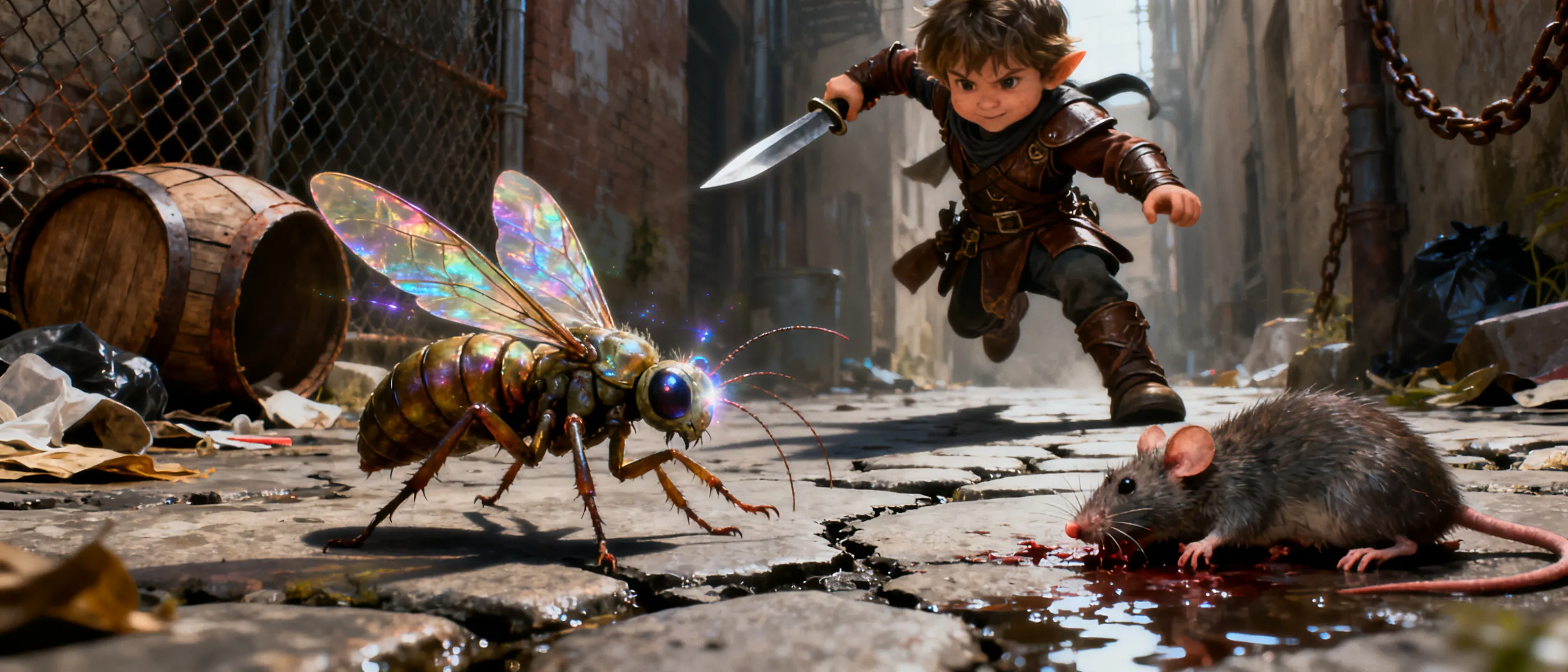
The Plague Scarab is a small, insidious creature that thrives in urban environments. Shiny and iridescent, with a carapace reflecting light in nauseating hues, this insect is the harbinger of disease. It is often found scuttling through the underground tunnels of cities or hiding in the cracks of dilapidated buildings, lying in wait for unsuspecting prey. They thrive in filth and decay, drawing their sustenance from the remnants of food and refuse. Although they function on a primal level, these creatures carry a malevolent intent, using their infectious bites to spread their diseases and wreak havoc on urban populations.
Monster behavior
Plague Scarabs are cunning and prefer to attack from the shadows, often swarming their prey. They work in small groups to maximize their effectiveness, using their Disease Infestation trait to spread ailments stealthily. When under threat, they will rely on their Pack Tactics to ambush enemies, targeting the weakest members of a group first to spread confusion and fear. They do not fight to the death but will retreat if their numbers dwindle, seeking safety in the nooks and crannies of their urban habitats. If abandoned, they will move to locate new prey, always hunting while avoiding any serious danger.
Ecology
Plague Scarabs play an essential role in the ecosystems of the cities they inhabit. They feed on decayed organic matter and help to break down waste, albeit in a way that facilitates the spread of disease. Their lifecycle is closely tied to the availability of waste, thriving in areas that are neglected by humans. While their method of propagation is harmful to many, it is nature's way of maintaining balance within the urban landscapes. Larger predators may also prey upon them, using these small creatures as a source of nourishment.
History
The origin of Plague Scarabs is shrouded in mystery. Scholars believe they were once ordinary insects that adapted to thrive on human refuse and waste. Their ability to harbor and spread diseases evolved over generations as they learned to exploit the weaknesses of their environment. Tales of their attacks have spread throughout urban centers, leading many to mistake them for mere pests instead of recognizing their true danger. They are often blamed for outbreaks of sickness, making them both feared and misunderstood in the cities they plague. Urban legends about these creatures help solidify their place in folklore among the citizens, further enhancing their nefarious reputation.
Ready to Unleash Your Dungeon Master Potential?
Join thousands of DMs and turbocharge your campaign preparation with Fable Fiesta!
Register, and get access to monster abilities, combat behaviour and lore!